
Geothermal Energy
What is Geothermal Energy?
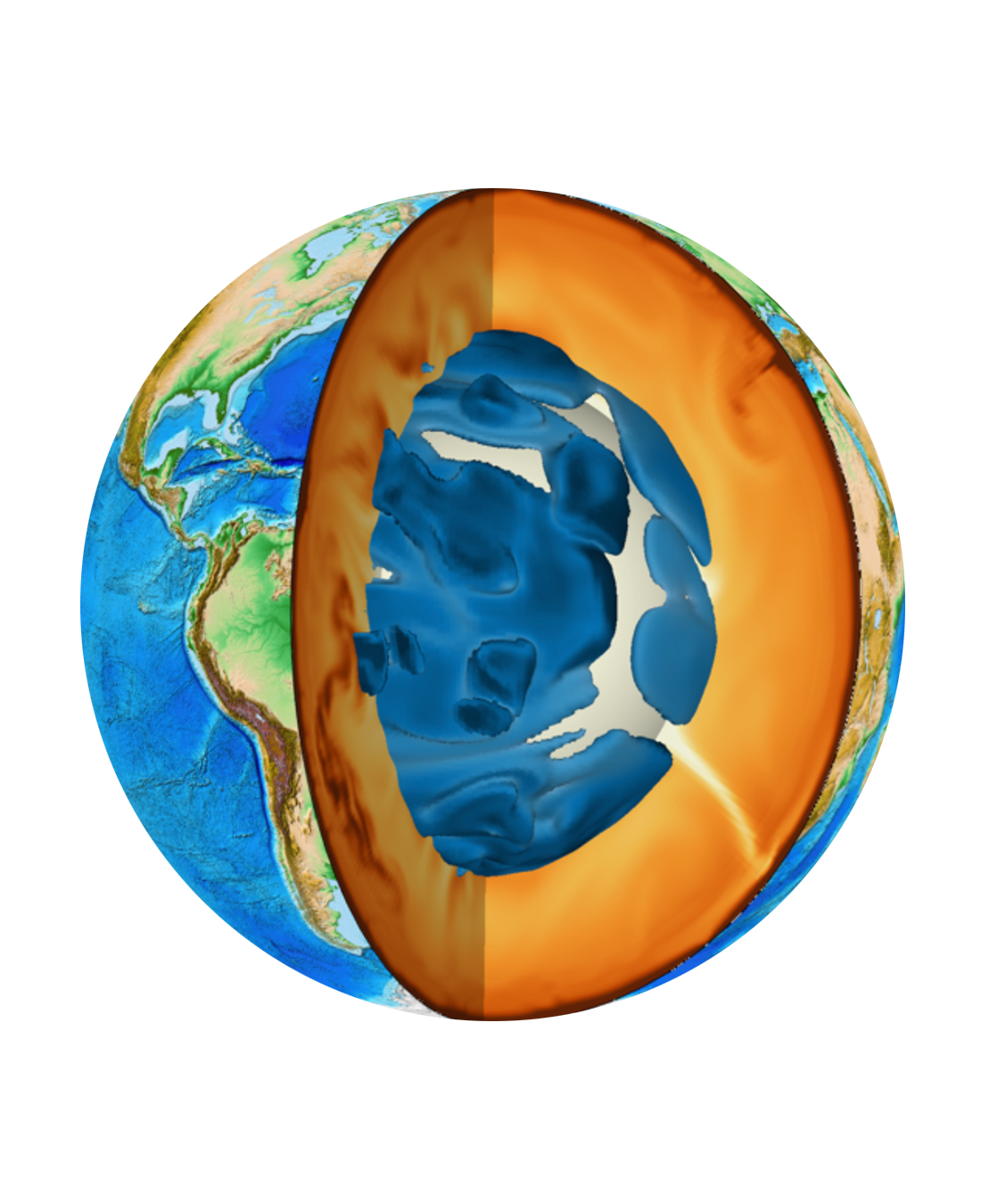
Geothermal energy is heat from within the Earth, a renewable resource tapped from underground reservoirs of hot water and rock, used for direct heating, direct cooling or to generate electricity. It's a consistent, weather-independent power source, generated by residual heat from the planet's formation and radioactive decay, extracted via boreholes to drive turbines or heat and cool buildings.
The Earth’s crust is only 1% of the planet’s radius and volume, so geothermal resources are remarkably close to the surface in many parts of Europe, and not only in volcanic regions. Even with current mechanical drilling technologies, this deep heat resource is readily accessible at depths of less than 5km in sedimentary basins.
Image: University of Oxford, Dr. Paula Koelemeijer PhD / GPlates
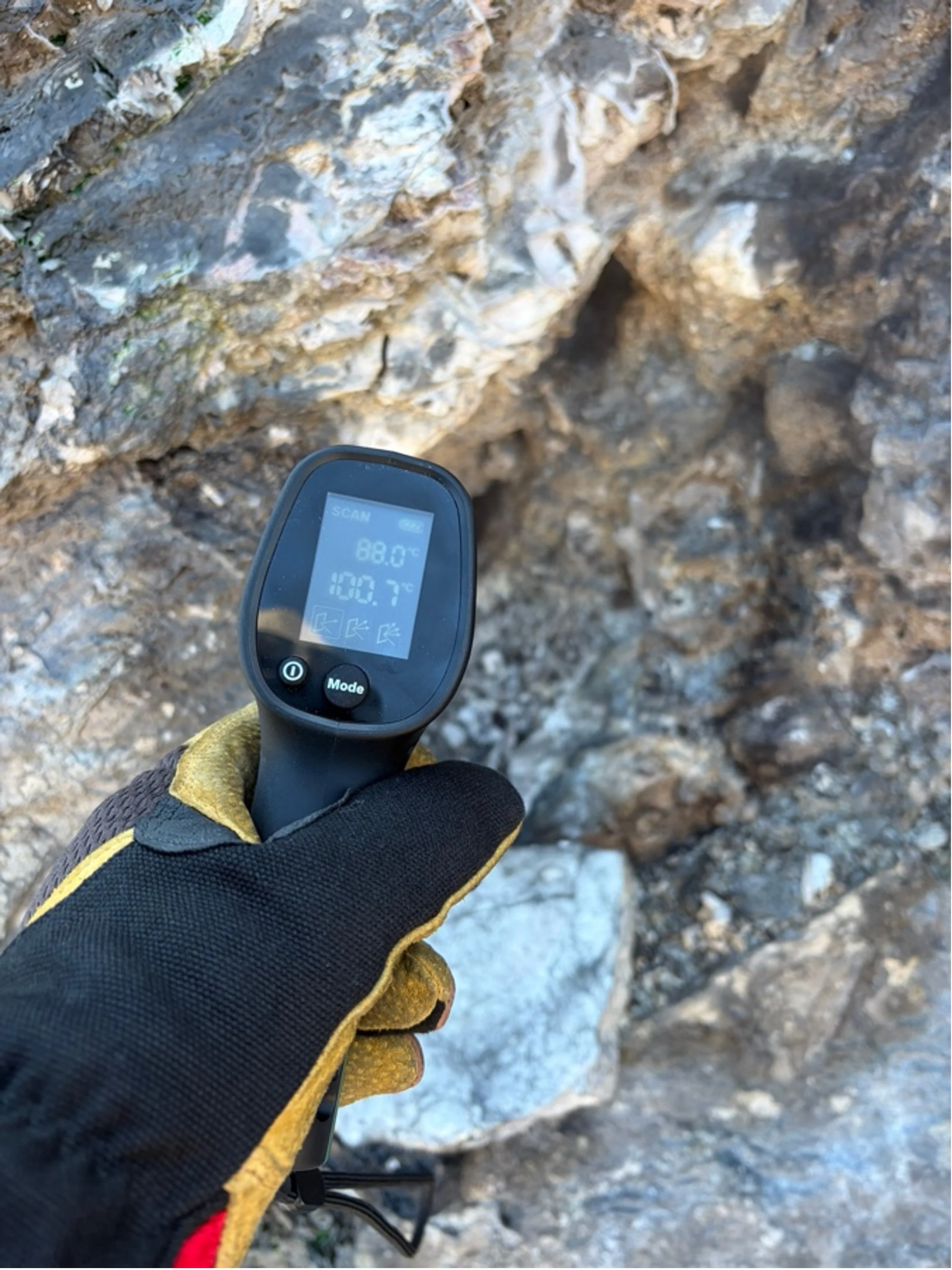
In some regions of Europe, for example in Tuscany, Italy, geothermal reservoirs can be seen exposed at the surface with heat escaping from geothermal fumaroles with temperatures of over 100 degrees Centigrade.
Photo: Measurement of geothermal fumaroles temperature at the Parco Geotermico Delle Biancane, Tuscany.
Geothermal energy is utilised to heat and cool buildings, power industrial processes, and generate electricity.
In Germany, around 57% of all energy demand goes towards generating heat with a significant portion of that being for space heating, while buildings as a whole account for nearly 35% of final energy consumption, mostly for heating and hot water. The German heat sector, including space heating, hot water, and industrial process heat, is a massive consumer of energy, making the shift to renewables crucial for the energy transition.
Deep geothermal energy alone could cover more than 25% of Germany's annual heat demand. When combined with near-surface geothermal systems and high-temperature storage, the total potential contribution could be even higher, with some estimates suggesting around 50% of total heat supply by 2050.
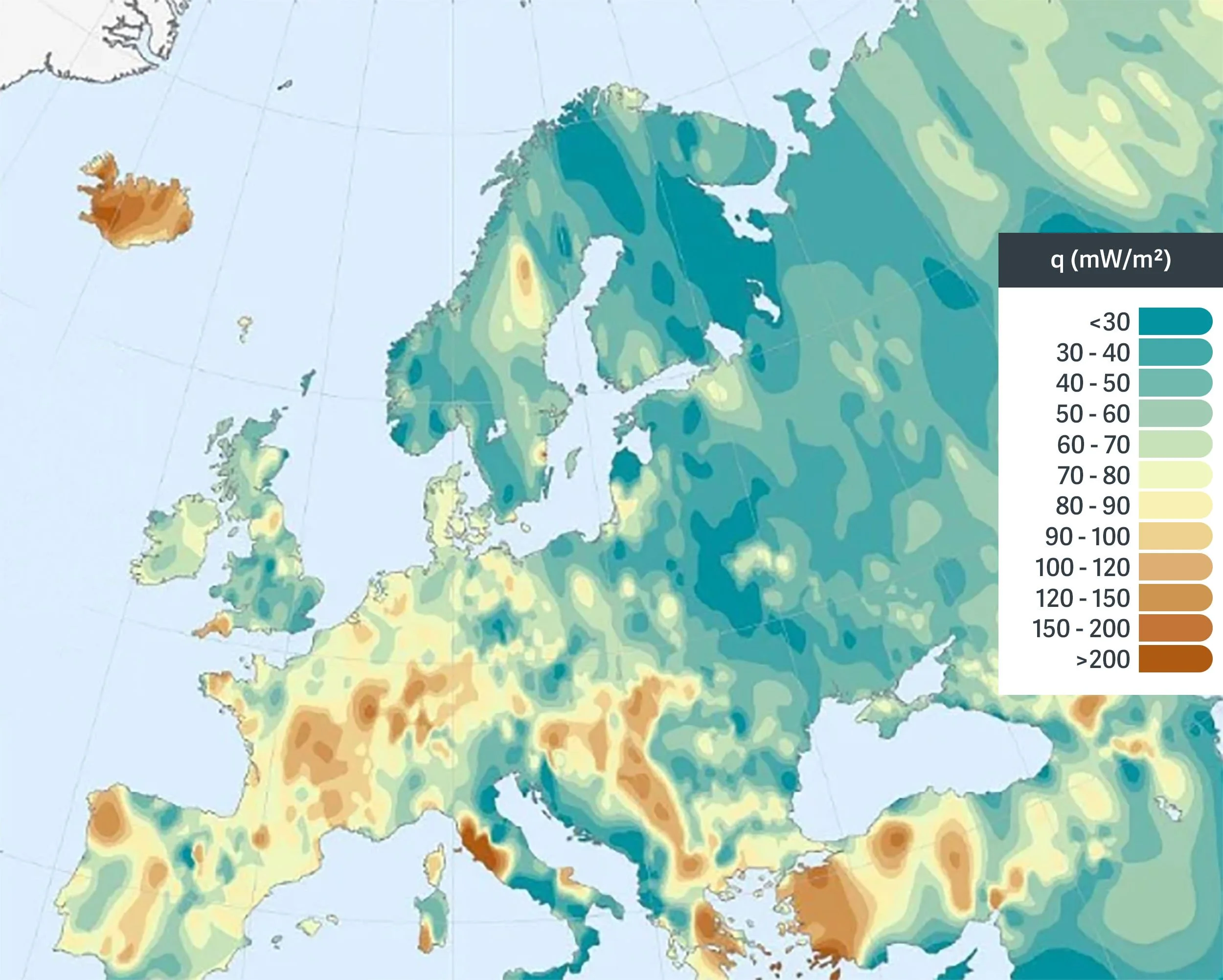
Image: Surface heat flow rate map for Europe extracted from the Atlas of Geothermal Resources in Europe.
Geothermal systems
Near-Surface Geothermal Energy: The potential from near-surface systems (such as ground-source heat pumps for individual buildings) adds considerably to this figure. Including this potential, a total expansion target of around 500 TWh per year seems realistic.
Deep Geothermal Energy (Hydrothermal): This proven technology has the potential to provide over 300 terawatt hours (TWh) per year, which equates to roughly 25% of the total German heat demand. This would significantly increase the share of renewable heating in Germany.
Deep Geothermal Energy (Petrothermal): Also called Engineered Geothermal Systems and Advanced Geothermal Systems, if EGS and AGS are included, the potential contribution is significantly higher still. The German Environment Agency (UBA) has calculated scenarios where shallow and deep geothermal energy could provide about half of Germany’s total heat supply by 2050.
Currently, geothermal energy is a largely untapped resource in Germany. Deep geothermal plants and shallow geothermal units account for a very small percentage of the total heating and cooling supply:
Deep geothermal plants currently provide around 0.1% of Germany's heating and cooling.
Near-surface geothermal contributes about 1.2%.
The German government has pledged to greatly expand geothermal energy use. In 2025 announcing the Geothermal Acceleration Act (GeoBG) with an official goal to feed ten times as much geothermal energy into the heating network by 2030 as it does today.
Image: Geothermal map of Germany from BVG.
Are there comparable projects in Bavaria?
The ability to extract energy efficiently, sustainably, and in an environmentally friendly way from the Earth is advancing through continuous technological improvements.
Already, 480.000 near-surface geothermal systems with drilling depths of up to 400 meters are in operation across Germany, predominantly ground source geothermal heat pumps. Every year, 15.000 new installations are added (Source: German Geothermal Association).
Deep geothermal projects, with depths exceeding 400 meters, like the one to be undertaken by GTR are also already operating. Currently, 43 deep geothermal plants are in operation across Germany, serving as heating and power plants or baseload power stations.
In Bavaria, there are currently 25 deep geothermal energy plants in operation. For further information please see the Geothermie-Allianz Bavaria website.
The Free State of Bavaria is the leader in deep geothermal energy in Germany with over 93% of all the heat generated by geothermal plants in Germany coming from Bavaria. Currently there is over 371MW of installed capacity in Bavaria, equal to circa 3.4TW hours of heat each year being provided to Bavarian citizens and companies.
Image: Installed geothermal heat production capacity. From book “GEOTHERMIE - the energy of the future” ISBN 978-3-88863-030-9
Information Centre
The following links can be used to gain more insight to geothermal energy.
Associations & Federations
Bundesverband Geothermie: The German Geothermal Association, representing companies, scientists, and individuals across all geothermal sectors, promoting its use and informing the public
https://www.geothermie.de/aktuelles/nachrichten
Geothermie-Allianz Bavaria: Promotes geothermal energy within Bavaria.
Research & Science
Helmholtz-Zentrum Potsdam Deutsches GeoForschungsZentrum (GFZ): Conducts extensive research in deep and medium geothermal energy.
Fraunhofer Research Institution for Energy Infrastructures and Geothermal Systems (IEG): Focuses on geothermal systems, geology, and resource exploration.
Geocenter Hannover (GZH): A consortium of geoscientific organizations.
Institut für Energetik und Umwelt (IE Leipzig): Covers economic aspects of geothermal use, from heat pumps to power.
International Geothermal Center Bochum (GZB): A research centre focused on economic applications.